

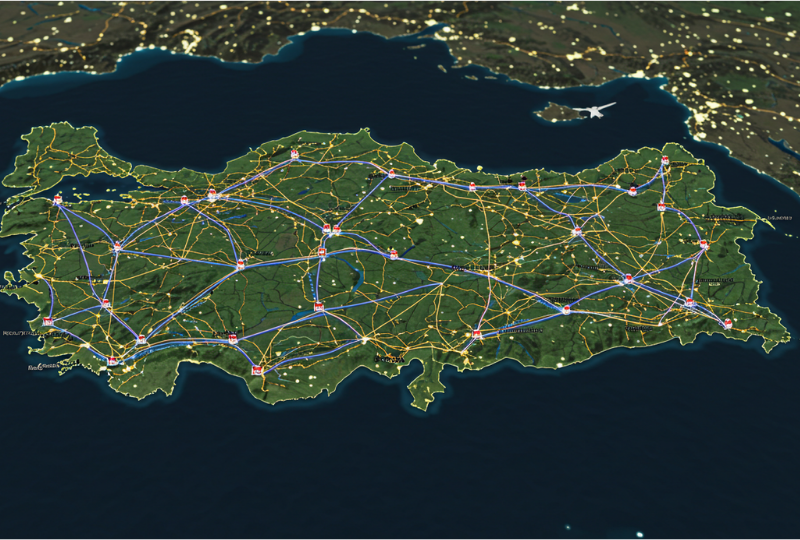
Turkey is not only a natural bridge between Asia and Europe but also a strategic gateway to the Middle East and Africa. This unique geographical position transforms Turkey from a simple transit country into a powerful regional logistics hub. Its proximity to the European Union, extensive road network, and strong port infrastructure make it an attractive center for exporters and importers alike. Furthermore, multimodal transport options, short transit times, and advanced transshipment capabilities strengthen Turkey’s competitiveness in the global supply chain.
Over the past decade, large-scale infrastructure investments have significantly expanded Turkey’s logistics capacity. High-speed rail lines, modernized highways, logistics villages, and upgraded ports are reshaping the sector. In parallel, customs digitalization has provided remarkable efficiency gains. Electronic declaration systems, single-window applications, and integrated digital platforms have accelerated document flow while minimizing operational errors. Free zones also create new opportunities for storage and value-added logistics services.
"With its strategic location, evolving infrastructure, and digital transformation, Turkey continues to strengthen its role as a regional logistics power."
The rise of e-commerce and micro-export has redefined logistics priorities in Turkey. Today, it is not only about handling large container shipments but also ensuring fast, small-scale deliveries. Last-mile logistics, returns management, and simplified customs procedures are becoming crucial factors for customer satisfaction. At the same time, sustainability has emerged as a new competitive field, pushing logistics companies toward green solutions, carbon footprint monitoring, and eco-friendly packaging strategies.
Looking ahead, Turkey’s logistics sector is set to evolve further through digital transformation. Data analytics, AI-powered visibility platforms, sustainable packaging, and alternative fuel strategies will enhance agility and resilience across supply chains. This evolution will empower businesses to remain competitive while adapting quickly to global disruptions.
In conclusion, Turkey is steadily positioning itself as a regional logistics powerhouse—not only by virtue of its geography but also through its infrastructure development, digital transformation, and sustainability-driven vision.
Emerging trends such as blockchain-based traceability, drone and autonomous vehicle deliveries, AI-powered demand forecasting, and green energy solutions are expected to shape the future of logistics. With its young population, rapid technology adoption, and dynamic entrepreneurial ecosystem, Turkey is well-positioned to embrace this transformation. Logistics companies that integrate seamlessly with digital platforms will not only strengthen their regional presence but also gain a competitive edge in the global market.